
Erebaken
On the frontier of crypto banking.


In early 2026, two landmark events crystallized a transformation years in banking, with Erebor, a brand new FDIC insured national bank opened its doors with $635 million in capital, and Kraken became the first digital asset firm in history to receive a Federal Reserve master account, which allowed Kraken to gain direct access to the same payment rails used by JP Morgan and Bank of America.
Together, these developments mark the moment crypto infrastructure is now in the core banking system, and the announcement of Erebor in June of last year got me interested enough to post a video about it.
I’m extremely surprised that Coinbase didn’t beat out Kraken to get a Federal Reserve master account.
Erebor filed its national bank charter application with the Office of the Comptroller of the Currency (OCC) on June 11, 2025, receiving preliminary conditional approval on October 15, 2025. By February 2026, it had received its final charter and opened for business, the first new national bank charter approved during Trump’s second term.
Erebor is not a crypto exchange or a DeFi protocol and instead a fully FDIC-insured bank that happens to integrate blockchain infrastructure into traditional banking. It service model operates across two domains, one offering FDIC insured deposit accounts, credit and lending products, payments services, and payroll services, focusing on startups. On the crypto and tech side, it plans to hold stablecoins and wrapped stablecoins on its balance sheet and enable fiat. to stablecoin conversion for global payments, as well as offering crypto collateralized lending ~ credit lines backed by cryptocurrency or private securities, as well as operating blockchain based payment rails for 24/7 settlement.
Tech sector lending, with an interest on financing GPU equipment for AI data centers, extends guaranteed loans to defense technology startups, underwrites robotics and aerospace companies, and accepts unconventional collateral like precision machine tools.
The founder of the bank stated “You can think of us like a farmers’ bank for tech.” ~ which is pretty fitting, as the target clientele includes AI, crypto, defense and manufacturing companies. Erebor also serves payment service providers.
Erebor was started, largely, to fill a hole left by Silicon Valley Bank (SVB), but with of course crypto and blockchain capabilities that SVB never had. Erebor, as it operates under some of the most rigorous regulatory frameworks in American banking, must keep a minimum of $276 million in paid-in capital, and keeping a Tier 1 leverage ratio of at least 12% for the first three years while also submitting to ongoing governance and risk management reviews.
Precedent
This OCC approval set a significant precedent, as the agency determined that a national bank may hold non asset backed virtual currencies on its balance sheet to pay gas fees, which classifies such act as “convenient or useful” and incidental to the business of banking under federal statute.
Kraken entered a banking revolution where it went from an exchange to a fed connected insitution, taking over six years to evolve its existing cryptocurrency exchange into a regulated banking entity over six years, culminating in the March 4, 2026 Federal Reserve master account approval that was the culmination of a strategy that began in Wyoming ~ 2020.
When Kraken received a Wyoming Special Purpose Despository Institution (SPDI) charter on September 16, 2020, it made it the first digital asset company in the U.S. to receive a bank charter recognized under federal and state law, as well as being the first de novo bank chartered in Wyoming since 2006.
SPDI charters operate fundamentally differently from a traditional bank charter, as it istates that Kraken must hold 100% of client fiat deposits as liquid assets, (cash, Treasuries, or deposits at the Fed) at all times, and cannot make loans with customer deposits. Deposits into Kraken are not FDIC insured, but the full reserve model protects against the fractional reserve risk that FDIC insurance is designed to protect against.
Advocates, would state that this approach to banking is inherently safer than a fractional reserve system.
On March 4, 2026, the Federal Reserve Bank of Kansas City approved a limited-purpose master account for Kraken Financial, making it the first digital asset bank with direct access to the Federal Reserve’s payment infrastructure, which gave Kraken direct access to Fedwire connectivity, the interbank payment network that processes trillions of dollars daily, without relying on intermediary correspondent banks.
Erebor vs Kraken, models for the same revolution
Erebor and Kraken are the most visible manifestations of a regulatory and market transformation that accelerated dramatically in 2025-2026, with 18 companies filing new charter applications with the OCC in 2025, up from just one in 2024, more than the prior four years combined. with fourteen of those being blockchain enabled companies. On December 12, 2025, the OCC simulataneously granted conditional approval for five national trust bank charters: Circle (USDC issuer) Ripple, Paxos, BitGo, and Fidelity Digital Assets, with early 2026 having Bridge (stripe subsidiary), Crpto.com receiving approvals.
The question is no longer whether companies will become banks or banks will embrace crypto, and both are happening simulatneously. Erebor represents the full integration model, a traditional bank rebuilt from the ground up with blockchain infrastructure and targeting the specific market gap left by SVB’s collapse. Kraken represents the evolutionary model: a crypto native company that spent six years building toward direct Fed connectivity.
88% of global banks are now announcing or exploring blockchain based services, and Visa’s own analysis concluded that financial institutions are no longer asking whether they should develop crypto strategies, but how quickly they can implement them.
What’s refreshing is to see young or ~my age leadership at a financial insitution. This past week Interview Magazine posted an article titled “Meet the Finest Boys in Finance”, in which two work at Goldman Sachs. This piece went insanely viral on twitter, largely due to the laughable responses given to the questions, but I thought it was lighthearted.
Goldman Sachs professed their media team did not approve of the article before hand, but what’s far funnier is seeing their Bloomberg profile with the Interview article as a link.
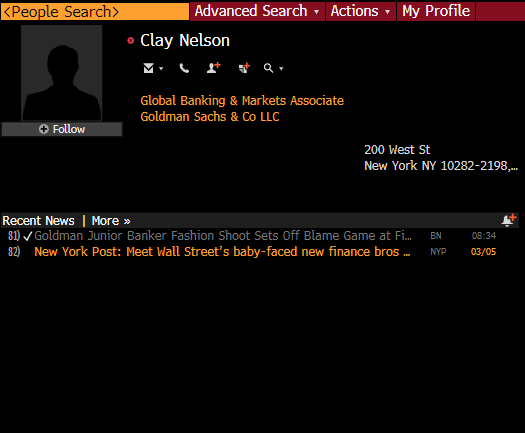
I hope these guys don’t get reprimanded as the article, to me, was all in good fun. Social fun has probably been aha
This video from David Hoffman, featuring what the world was like in 1979 on Wall Street. Given the release of the JFK Jr. biopic ~ irrelevant as the biopic mostly covers the 1990’s~ it’s interesting to see what culture was like 50 years ago.
I’m largely hopeful that we will see more financial institutions started in the U.S. with expedient minded bank approvals. The fact it took Kraken six years to get a license is just too long.
From tinkering, I’m not a huge fan of x402 on the dev side, I would be curious, though I don’t necessarily love the idea, of Tempo’s dev support/ease.