ANYONE can cook
on undiscovered talents and a weekend in the woods


This past weekend I attended the 1517 Unplugged summit, and the experience remains genuinely special. I’ll perpetually recommend this event to anyone who asks. Huge thanks to Danielle Strachman, Michael Gibson, and the 1517 team for building a container where real connection happens.
I’ve spent years at crypto events where the ambient mood oscillates between skepticism and spectacle: some doomers, some chaotic edges, many quietly worried about physical safety. Conversations often feel hedged, like everyone’s guarding alpha or optimizing for optics.
So when I told friends I was going completely offline in the middle of the woods with no WiFi, no cell service, and a trust-first, light-touch setup, the first response was, “Is that… safe?”
My honest answer: the odds of anyone holding a grievance against me are nil. The group agreed. And with that, I headed into the redwoods.
What unfolded was a rare, generous kind of magic.
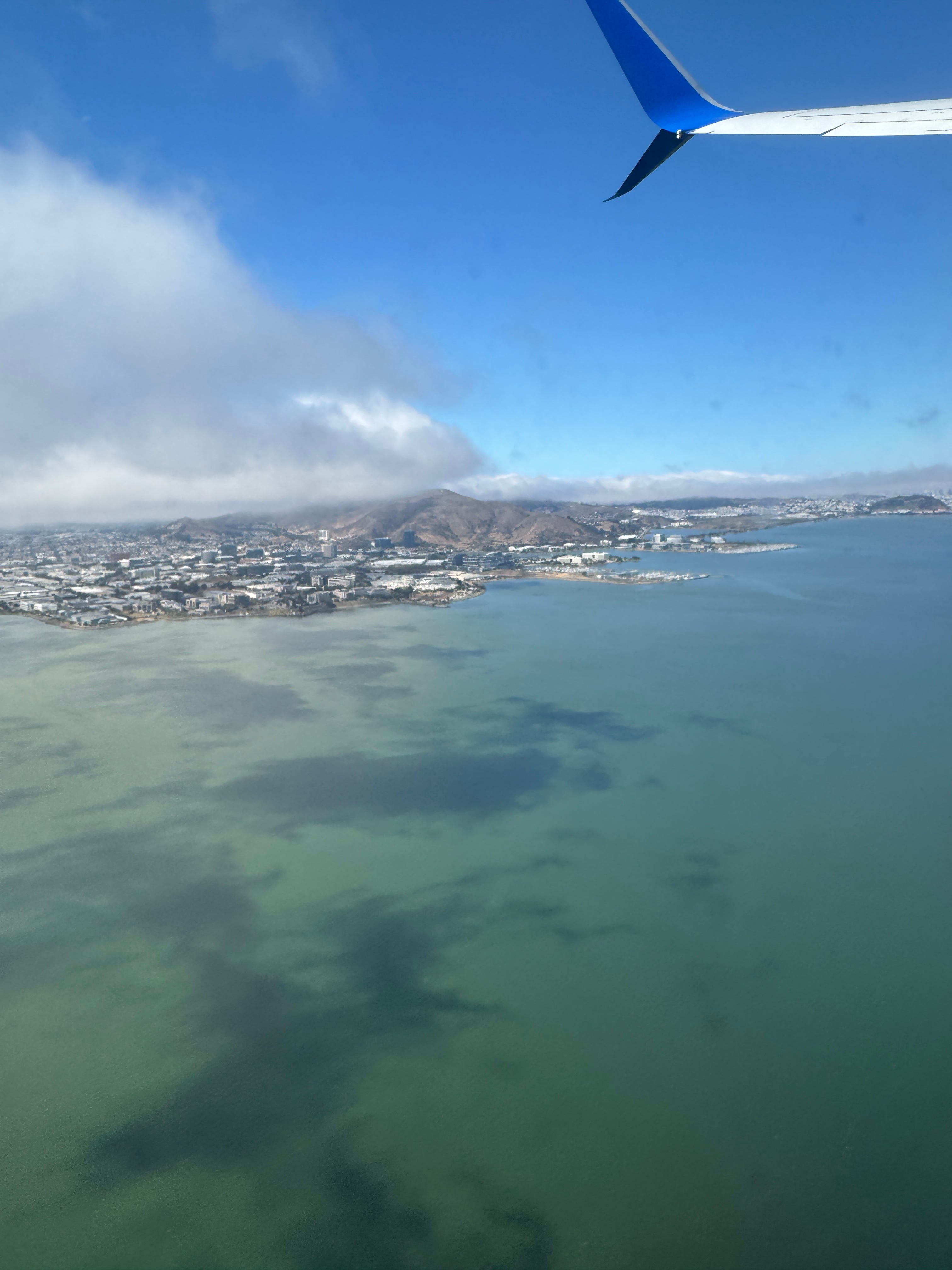
I landed in San Francisco (somehow my first time at SFO Airport) and drove out to camp. The journey felt like stepping through a membrane: swapping the buzz of notifications for the hush of ancient trees. Your nervous system downshifts startlingly fast when the last bar disappears.
In a connected world, meeting someone new starts with a reflex: “What’s your number?” followed by a furtive search. We accumulate metadata before we offer attention. LinkedIn headlines, Twitter follows, mutuals. We outsource our intuition to the feed.
Unplugged, you lose that option. You don’t know who you’re talking to. There’s no context to preload, no follower count to bias you. The only posture available: curiosity over certainty.
The Joy (and Design) of 1517
The joy of the 1517 summit grew from how absence was curated.
This was my best event experience in a long while, because everyone was busy with their own strange, beautiful solutions to real problems, and the setting made it safe to reveal the messy first drafts of those solutions.
In that safety, people did unexpected things. A VC cabin mate beatboxed during the talent show, leading the crowd into that viral fruit-and-pen earworm, because it made sense in that room, not because it would farm followers. We watched Ratatouille (back to that in a bit) the first night and Ghostbusters the second, and no one lifted a phone to capture it. The point was to share the same laugh at the same time.
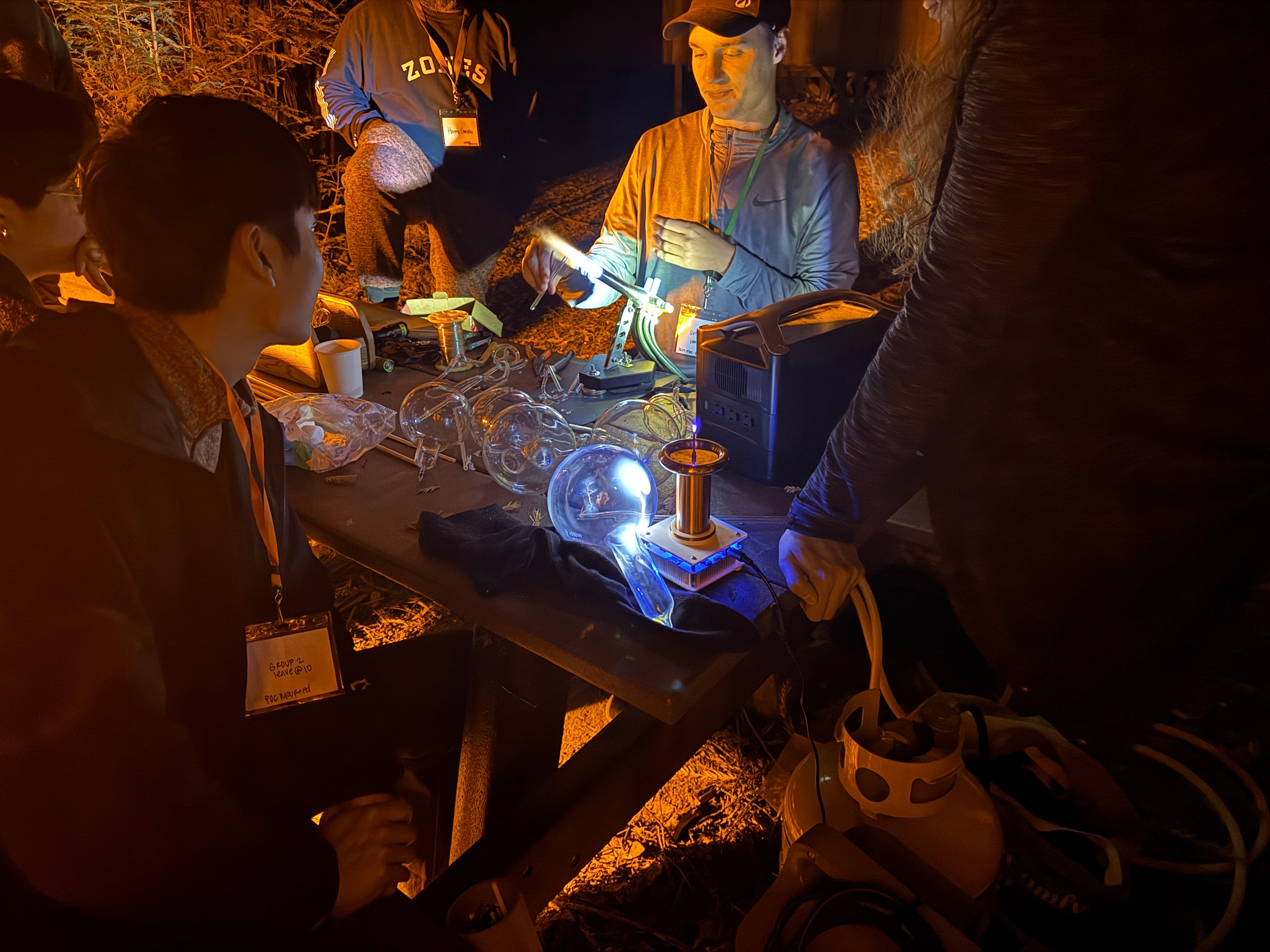
On the second night, campers bent neon glass tubes at a picnic table under the stars. Light shaped by hand. In an algorithmic economy, acts like that feel almost subversive.
When you liberate bright people from the loop of external validation, curiosity starts to outrun status. Vulnerability stops being “on brand” and reverts to its true form: a bid for real contact.
For two days I was able to eat breakfast, lunch and dinner across from someone without the possibility of either of us going on our phones. I met three really great people this way, ironically one over breakfast, one lunch and the last, dinner.
Event Design: Collisions and Care
Great events are engineered serendipity. They create pattern interrupts and keep cliques porous. I’ve been drafting a piece on event size and how gatherings decay when collisions disappear. Think Coachella 2010’s wandering intimacy versus today’s over-optimization. Burning Man before the maps.
To facilitate an event where you run into new people and do not fall into a group is harder than it may sound, and Unplugged nailed it.
What made Coachella feel better in 2010 and Burning Man feel truer before it swelled came down to design choices that produced collisions.
Coachella 2010 vs. now
Back then the footprint was tighter, sponsor buildouts were smaller, and itineraries had slack. You naturally drifted: you’d leave one tent to “catch a song” and get abducted by a mid-bill set you’d never planned to see. Sound bleed became a compass; short walks made sampling effortless; meetups happened by landmark, not live location. Fewer barricaded VIP zones and fewer hyper-programmed “must-see” moments kept groups porous. The formula: friction + proximity = discovery. Today’s bigger footprint, harder segmentation, and hyper-optimization (schedules, shuttles, brand compounds, VIP stratification) eliminate those micro-detours where serendipity lives.
Burning Man before the crowding
Earlier years were smaller and more interdependent: fewer turnkey camps, more shared labor, more “stop and help” moments. You couldn’t outsource participation; you had to ask, offer, and linger. Neighborhoods bled into each other, art cars felt like favors not ferries, and the map didn’t pre-solve your night. You wandered, and wandering produced unlikely adjacency. As scale and infrastructure grew, segmentation and pre-planning crept in: clearer maps, larger sound camps, plug-and-play comfort. Convenience rose; collisions fell.
Unplugged quietly reinstated those old virtues on purpose: small enough to run into the same person twice, unprogrammed pockets between activities, shared meals, no reception to retreat into, a talent show and hands-on making that mixed skill levels, and seating/space that resisted calcifying into cliques. The formula remained consistent with those earlier eras: engineered chance + gentle constraints → real connection.
In these activities, Michael Gibson held a socratic discussion on the “creative process”, where he gave a preamble on the history on notable figures and the fact that creativity is rare and perishes over time, and those in the room gave their own tips on facilitating their own creativity.
My personal answer? Conversing with people you’ve never met before enhances your scope on reality, introducing you to problems you may not individually face, leading to solutions you’d have never came up with on your own, and doing this frequently builds you.
Here’s what I mean.
I live a pretty great albeit very frugal life (intentionally). I live in a house thats only about 1,000 livable square feet, with a 5 year old Lexus I bought used, thats entire appeal is that it is bulletproof reliable and will outlast the concept of lasting.
I do this because I invest all of my money and afford myself the ability to do anything I want with my life, otherwise known as true freedom.
Due to this, I rarely, if ever, run into issues.
So when I run into someone who I’ve never met, from a place I’ve either never been or I infrequently go to, living a life I do not live ~ I learn a lot.
I love hearing people talk about the issues they run into and theorize on how to solve them, for them.
The benefits from this are compounded by going to the 1517 Unplugged event, where I met someone who led me to have an idea I would have never had before, and the resulting idea is one you’ll see later.
If you’re reading this and wondering, “Okay so WTF do I gain from attending this, Anderson? How does this help me?”
You get to meet, eat with, and potentially dorm with people that you’d have never met otherwise, completely connected to them, as an individual, not through digital means.
And in doing so, the potential for alpha you’ll take away is endless.
Identity Without Metadata
Events like this quietly test a hypothesis about identity: who are you when there’s nothing to index?
Online, we pre-announce ourselves. We ship bios ahead of our bodies. Unplugged, you reveal yourself through conversation, over time. You become legible through stories, attention, a joke that lands, or a silence that holds.
Slower. Riskier. Better.
The first day, I was nervous. Dialed up, introvert brain doing its thing. By Saturday I was already nostalgic: “Damn, these are the greatest people; I had nothing to worry about, and I was too quiet on Friday.” My only regret: not meeting everyone deeply. Regret of too many good conversations is a great problem to have.
On Risk and Trust
About the safety question: yes, there’s risk in heading into the woods without the grid. But the more interesting risk was social: showing up without the normal armor. No blue checks, no warm handshakes via mutuals, no “quick Google” to calibrate your tone.
That risk paid dividends. Trust emerged on site, built through small exchanges we usually rush past. Trust assembled itself like a tent: pole by pole, conversation by conversation.
Why This Matters (Beyond the Weekend)
In a hyperconnected world, we’ve mistaken knowing about people for knowing them. We prefer the pre-digest to the meal. But our deepest connections live in the undownloadable zones: the pause before an answer, the unsearchable anecdote, the moment you realize you like someone for reasons you can’t articulate.
What made 1517 Unplugged special was deceptively hard to design: a container where you keep bumping into new people instead of congealing into the same clumps. Where “Who are you?” becomes an invitation to discover each other in real time rather than a trick question answered by a profile.
In the movie Ratatouille, which follows Remy, a rat with a refined palate of trash, that believes Gusteau’s “Anyone can cook.” In Paris he secretly cooks by steering the garbage boy Linguini, and success strains Remy’s bond with his colony and exposes Linguini’s limits. When critic Anton Ego arrives, Remy serves confit byaldi that recalls Ego’s childhood. The restaurant closes after the rats are seen, but Remy and Linguini open La Ratatouille with Ego as patron, proving talent can come from unlikely places, and that initial truth of “anyone can cook” is proven by Remy's talent and dedication.
movie can be seen in 3 minute clips for free here: https://youtube.com/playlist?list=PLd2NKagZ7gdsIpPNBmgcX6tFPh3j_Mscj&si=QSu9rv7eqMKaEk-9
Chef Gusteau states:
You must try things that may not work, and you must not let anyone define your limits because of where you come from. Your only limit is your soul. What I say is true - anyone can cook... but only the fearless can be great.
And the critic in the story, Anton Ego states,
"In the past, I have made no secret of my disdain for Chef Gusteau's famous motto, 'Anyone can cook.' But I realize, only now do I truly understand what he meant. Not everyone can become a great artist; but a great artist can come from anywhere." -Anton Ego
Two days in the woods reminded me that uncertainty operates as the foundation of human connection. When we remove the impulse to resolve every unknown instantly, we make space for wonder. And the people who arrive to the place of wonder, the artists, can truly come from anywhere.
I met a ton of great people working on carbon capture batteries, growing consistent four leaf clovers, people looking for their next idea, and much more, and would love to (hopefully!) be back next year. If I could tweak one thing, I’d make it three days. Not to do more, but to linger longer in that rare compound of trust and play.
Because everyone I met, provided with space, a bit of capital and the support to do so, can do amazing things, and seeing that, in person and disconnected from the noise from the outside world, is a beautiful sight to behold.
Closing the Loop
Being unplugged disconnects you from the internet and reconnects you to the primary colors of experience: attention, curiosity, generosity. The redwoods have stood through centuries without reception, and somehow life found a way to be meaningful anyway.
The magic of being truly unplugged with great people grows from the presence of everything we forget to notice when we’re always connected.
As an aside, if anyone has watched the movie Logan (2017) where the Wolverine helps the Transigen children arrive into the forest so they can be free, some themes kind of align with this but I cannot elaborate.
Grateful to Danielle, Michael, and the entire 1517 crew for making it possible.
I would love to thank some of the people that really made me think but I did not gain their permission to share.
There’ll be some future blog posts that come out of this, one I am exploring and finishing is how parental distance, close distance to children aides in their development immensely and is becoming a rarity, another surrounds decentralized education, and a few of my cherished friends and my former bosses have asked me to share my thoughts on Bitcoin and its future.
I’m a long time, big fan of Balaji, Twitter for me is mostly a Balaji tracker, and I may do a “thoughts on” his free to read manifesto, The Network State.
Considering doing a cursory review of the book, “Paper Belt on Fire” by Michael Gibson, where I’d score it a 9.4/10, primarily because it’s a great book that keeps you captivated, especially Chapter 8’s Nakamoto Consensus, but shares no prognostications (love whipping out that word like a cowboys revolver) on the FUTURE of crypto.